
You have no items in your shopping cart.


MEET the Founders & Team
Mike and Joylynn Jelliff, the founders of GeekStands.com as well as musicians. They are owners and users of the products GeekStands.com sells.
Learn about us!

14
Jul

It may sound like an incredible cliché but, starting off with a quality microphone stand is the foundation of having great audio. Mic stands are not just a holder for a microphone; they are instrumental in providing stable and quality recording, live performances and even broadcast stations.
A mic stand supports the audio quality as well as reduces disturbance noises by placing the microphone in an appropriate position and helps the users feel more comfortable. Selecting the appropriate stand requires knowledge of different types including straight stands, boom stands; desktop mounts as well as specialty stands for diverse recording and performance purposes.
There is more to just the stand, which in its own right can add or detract from your projections. Clamps, shock mounts, pop filters and management clips which helps to reduce disturbances in the workflow for the unwanted artifacts. Accessories are critical in any setup – from studio or live performances to home recording since they add flexibility in functionality to your equipment.
In this guide, you will learn about the major types of mic stands, basic accessories, tips and tricks on how to set up and perform at its best and most importantly how to maintain and get the best values out of your investment. It’s time to get into more mic stand related things and level up your home recording studio or performance area!
Types of Mic Stands
Desktop Stands

Podcast arm stands are small, collapsible, and for fixing a microphone at a table level to record voices up close for use in podcasts, live streaming, or voice overs. Often collapsible, simple and relatively light, they fix firmly to any flat surface where they are intended to be placed.
However, a disadvantage is when targeting sound from instruments or performers not seated right in front of the mic their relatively small size may detract from accuracy and distance.
Tripod Stands

Tripod stands are portable and very famous for studio as well as stage performers. Thanks to the three folding legs, these stands are very stable on various types of surface and height.
Some of these equipment are mostly mobile and can be tilted to several angles and are suitable for musicians as well as vocalists. These are expandable and when the width is increased stability is achieved while when the width is reduced, the legs can fit into tighter spaces.
Here is a customer review form our client Bernard Mbabazi
Great budget stand
Does everything that I would expect it to do. Good buy for the money.
Boom Stands

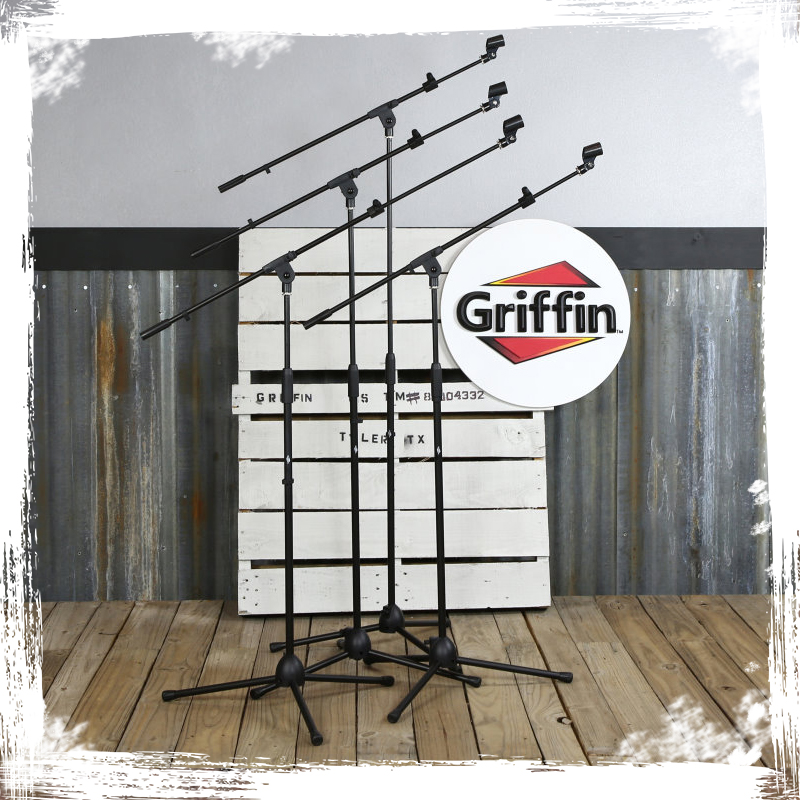
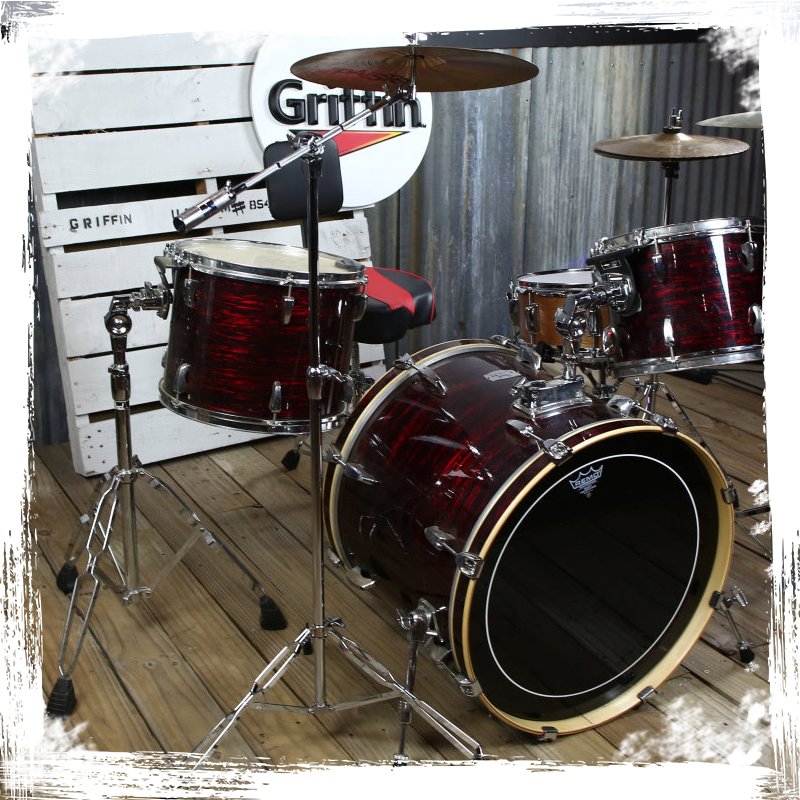
Now, stands that can feature an extendable boom arm type where the pod can position the microphone at a certain distance or orientation relative to the stand itself. This flexibility is especially essential for capturing instruments whose miking needs to be precise, and includes drums, guitars, and pianos.
Boom stands are applied in both live and studio environments allowing close and overhead mic placements w/o physically shadowing the sound source.
Here is a customer review by our client Matilda Kansiime
The griffin boom stand is not made from the heavy ...
The griffin boom stand is not made from the heavy gage metal as the dro pro. The griffin is lighter and has all the features as the dro pro.
Floor Stands
There are floor stands which are used for positioning the microphones slightly off the ground and commonly for bass drums, guitar amplifiers or other low power sources. A floor stand is relatively small and can be placed easily hence the microphone’s proximity to the sound source that needs to be recorded without use of booms.
They are somewhat fixed in their design but are very valuable in studios and live situations when a low-profile microphone position is needed.
Here is a youtube video for you in case you want a comparison between boom stand and microphone stand providing you the details which is better for you!
Types Based on Mic Stand Materials
Steel Mic Stands

Steel mic stands are most preferred because it provides strength and sturdiness in use hence recommended in studios and live events. Steel is denser than wood and as such, stands made from this material are less portable than their wooden counterparts and afford sturdy support to the bulkier microphones and paraphernalia.
Tubular steel ordinarily incurs higher wear and tear thus intended to be adequate for robust settings where the mic stands are often heavily used. They are also anti-corrosive, meaning they will last longer than other equipment of similar use.
Aluminum Mic Stands
Another advantage of aluminum mic stands is that they’re lightweight, lighter in fact than most metal mic stands, and can be easily carried around for use by musicians and sound engineers. It is not as strong as steel, but this is a metal that doesn’t easily break or dent when used for everyday recording or performance.
These stands are less likely to cause fatigue during setup and transportation which is a gain for touring or field recording. Another advantage of using aluminum is that it has natural ability to resist corrosive formation, thus it can be used both for indoor and outdoor application.
Plastic Mic Stands
The plastic stands of mic are cheap and easy to carry since they are used by individuals for events with less expensive equipment. These stands are lovely for microphones that are relatively lighter and for environments where the microphone is not going to experience the wear and tear like professional live streaming, studio, or touring.
They are just perfect for short time recordings or for recording in different places due to the ease of transport and installation of the plastic stands.
Composite Mic Stands
Carbon fiber is used more predominantly than in composite mic stands which are a hybrid of carbon fiber and other material, and these types have the best strength to weight ratios.
A composite material is designed to deliver the kind of strength that is needed in metal stands but with a substantially reduced weight thereby making it portable and strong.
Composite stands come in handy when: when mounted in a professional studio or on a mobile recording studio they can support robust microphones without adding fat to the set up. It is often difficult to corrode or wear them, but such tools are usually costly to produce.
Here is a comparison table for these stand types !
|
Material |
Steel Stands | Aluminum Stands | Plastic Stands | Composite Stands |
| Strength | High, very sturdy and durable | Moderate, strong but not as durable as steel | Low, suitable for light microphones | Very high, best strength-to-weight ratio |
| Weight | Heavy, less portable | Light, very portable | Very light, easy to carry | Light, more portable than steel, but stronger |
| Portability | Low, difficult to transport | High, easy to move and carry | Very high, ideal for quick transport | High, ideal for mobile setups |
|
Corrosion Resistance |
Anti-corrosive, long-lasting | Naturally resistant to corrosion | Susceptible to wear and weathering | Highly resistant, long-lasting |
| Durability | Very high, withstands heavy use | Moderate, durable for everyday use | Low, prone to wear and breakage | High, resistant to wear and tear |
| Suitability | Professional studios, live events, heavy-duty use | Musicians, sound engineers, touring setups | Casual or low-budget events, light recording | Professional studios, mobile recording, touring |
| Cost | Moderate to high | Moderate | Low | High, due to manufacturing complexity |
| Load Capacity | High, supports heavier microphones | Moderate, good for lighter mics | Low, best for lightweight microphones | High, supports robust mics while remaining light |
| Best Use Case | Studios, live events, heavy mics, rugged environments | Touring, field recording, light mics | Budget-conscious, occasional recordings | High-end studios, mobile setups, professionals |
| Setup Complexity | Moderate, requires more effort to set up | Easy, quick setup | Very easy, quick to assemble | Easy, though may require careful handling due to composite nature |
Importance of Mic Stand Stability with Base Types
Mic stand stability proves very crucial when it comes to making smooth and accurate sound productions since any form of movement at some point can be disastrous.
An unchangeable position of a mic stand is good because changes in position lead to noises, vibrations, and especially knocking over the stand, all of which create problems for the sound. The fundamental model of a mic stand constitutes an important function in offering this steadiness, and exists in variant forms, which are ideal for varied environments and purposes.
Tripod Bases
Free standing bases are available with three legs with the possibility to spread them wider for more stability on uneven ground. About these bases, it is most popular for the live shows, where the steadiness is extremely significant to cope with motions on the stage.
Tripod stands are also easily adjustable for both angle and height and can remain balanced when over height or a boom style stand is needed. On the other hand, tripod bases might occupy more floor space and this is disadvantageous, especially in compact structures.
Round Weighted Bases
Matches have round, weighted bases that are small in size and created for optimal stability with least floor area. These stands also come with extra weight towards the bottom to ensure the microphone falls in place without toppling over when supported by the stand and hence very appropriate for recording.
Round bases are also less intrusive; this makes that type of bases ideal for places with little space or places that are more or less specific in appearance. However, they are somewhat less mobile than tripod stands because of their bulk and inability to be folded.
Flat Bases
Flat bases give a very little profile to the table and balance in quite the same manner as the round base but are thin and broad. This design is simple to construct and takes up very little screen or floor space which makes flat based stands ideal for broadcast and studio use where stability is paramount.
They are not as likely to be knocked over as tripod stands but are lighter than weighted bases, and the unit can carry less weight than other types.
Mic Stand Accessories
Mic Clips
Mic clips are important especially because they help keep the microphone firmly anchored on the stand in case it is recording or being played.
This way, clips effectively minimize the movement of the mic and body handling noise therefore improving on clear capture and Minimal movement of the mic. Fortunately, most clips are adjustable to accommodate all sizes of mics which makes these accessories useful in almost any situation.
Shock Mounts
Shock mounts have the function of providing isolation between the microphone and vibrations in addition to other interferences.
Shock mounts hang the mic in an elastic frame allowing it to isolate the stand and surrounding vibration in low-frequency noise that can disrupt the recording session. They are especially useful for tracking vocals and acoustic instruments since any kind of vibrations can spoil the sound.
Pop Filters
Poppers are screens that you put in front of the microphone so as to minimize plosive sounds resulting from strong blowing of air, ‘p’ and ‘b’ inclusive. These filters reduce the level of sharpness of sound, which helps give a cleaner vocal sound to the recording.
Musical’s are especially used in studio vocal work since they reduce distortion and guarantee an excellent sound by controlling the air movement towards the microphone.
Factors for Choosing the Right Mic Stand for Your Setup
Purpose and Usage
The first thing that should be in mind when looking for the right mic stand is the type of microphone and how it is being used. Is it for a live stage, in a recording booth, for a podcast or for a live streaming?
The kind of setup is likely to determine the sort of mic stand you are going to use. For instance, live performances require more durable, mobile and height adjustable stands than it may necessitate studio environments whereby stability of the microphone placement is important.
Podcasts or streaming may need a desk or small stand mount while music instruments like drums may require an overhead stand or boom arm to capture the sound at different angles.
Mic Weight and Size
It is also an important factor to consider the weight and size of the microphone especially in relation to the mic stand. A heavy microphone demands a stronger stand to hold it, and its counterpart, a small and light microphone will just require a weak stand, or perhaps none at all.
This is a perfect reason why one needs to know that the stand that he or she is going to use will support the weight of the microphone without toppling over. Heavy microphones require a stand that has a large base or it can be made of steel or a strong aluminum.
Stability and Build Quality
A stand should properly support a microphone to reduce chances of falling mainly when used in high energy areas such as on a stage. Choose the stands that have wider bottoms or which have legs that can be folded into trips for that extra support.
Moreover, the built structure should be strong enough capable of withstanding the impacts of day to day use in cases where you intend on using it often. Easy transportability, durability, and ease of adjusting also characterize such outstanding materials such as steel or heavy-duty aluminum.
Adjustability and Height Range
The portability and also the heights of the microphone is important when you have to angle or raise the microphone at various heights. If you intend to move the mic around often, then it will be wise to seek for a stand with flexibility such as an arm that can be adjusted, the height or the boom arms.
This way you can align the position of the mic to the type of recording or performance that is being undertaken. For instance, a boom arm with height control is appropriate when performing multiple tracks on vocals while a small, standalone mounted floor stand with a lower, fixed height may do for static performances.
Portability
Versatility can be crucial if you move the mic stand from one place to another or from one performance to another. Ideally, a portable mic stand should be lightweight, folding/collapsible and well capable of withstanding the knocks of a tour.
Every musician or performer who travels to record the music on the go or performs that way will appreciate a stand that does not take much time and effort to set up or pack away. Undoubtedly, the most compact stands are tripod and desk-mounted ones, while round weighted base stands, for example, can be more cumbersome to relocate.
Material and Durability
The material used in making the mic stand has a direct bearing with the life span and efficiency of the stand. Steel mic stands are very sturdy, sturdy and offer great support, which makes them perfect to be used for large and regular events. They are however generally more heavy which can be an issue on portability.
The aluminum stands are also lighter and easy to transport but may not give the strength of the steel ones. Aluminum or plastic and composite mic stands are inexpensive and portable whereas they may not bear much load which can be required at certain scenes.
Stand Type (Desk, Floor, Boom, etc.)
In this case, the type of stand you are going to use will depend on the type of setup you intend to make and the intention that you have. Desk stands are perfect as they are used for podcasting, streaming or voice over where the microphone does not move from the desk or table.
These stands are lightweight and easy to maneuver especially in small spaces The stands described above come in a set of four. In contrast, floor stands are best used in stage performances or in studios where the mic has to be placed at standing position.
Booms stands consist of an arm that is rotated horizontally, such stands are well suited for recording sound from different angles or cases where the actual stand will interfere with the gig, musician or musical instrument.
Space and Storage
Think about how much space you will have for setup on stage / in the studio, as well as how much space you have for storage when not in use. When little space is available then go for models that are collapsible and can be stored when not needed. Some of the mic stands have movable legs or folding arms that may be retracted inward with the aim of using limited space.
Furthermore, in case you are going to transport the stand between uses, the device should be portable, and the construction should be as simple as possible. Storing the stand in a secure and compact space will also go a long way to maintaining the state of the stand in the future.
Compatibility with Accessories
Interchangeability with accessories is also a big consideration when selecting the best mic stand. A lot of microphone stands feature standard threads for compatibility with most microphones plus compatible accessories such as shock mounts, pop filters, and extension arms.
However, the chosen stand should be able to accommodate other accessories that you may wish to have apart from the structure.
For instance, you want to utilize a shock mount and therefore you should ensure that the size and weight of your mic stand will fit the mount properly. Just the same, your stand should accommodate the weight and dimensions of any mic clips, pop filters, or extension arms proposed for attachment.
Why Choose GeekStands for Mic Stands
At GeekStands, we are committed to providing our clients with mic stands made from the highest-quality materials. Our designers ensure that every stand is crafted with precision, focusing on durability, stability, and ease of use for both performers and sound engineers.
We offer a diverse range of mic stands that cater to various needs, whether you're recording in the studio, performing live, or broadcasting. From sturdy desktop stands to adjustable boom stands, we have options that provide maximum flexibility and support for any setup.
Our mic stands are built to last, designed for quick adjustments, and engineered to handle heavy-duty use, ensuring your microphone stays in place throughout every performance or session.
These features make GeekStands a go-to brand for mic stands, trusted by professionals across the industry. If you're looking for a reliable, high-quality mic stand, don't wait—get yours today and take your audio setup to the next level!
Share:
 Michael Jelliff